
Ottawa Responsible AI Summit 2025 Unites Leaders to Shape the Future of Ethical AI Governance
AI presents tremendous opportunities for innovation, prosperity, and public benefit. But without intentional guardrails and a shared vision rooted in equity, it risks amplifying the very inequalities we are trying to solve
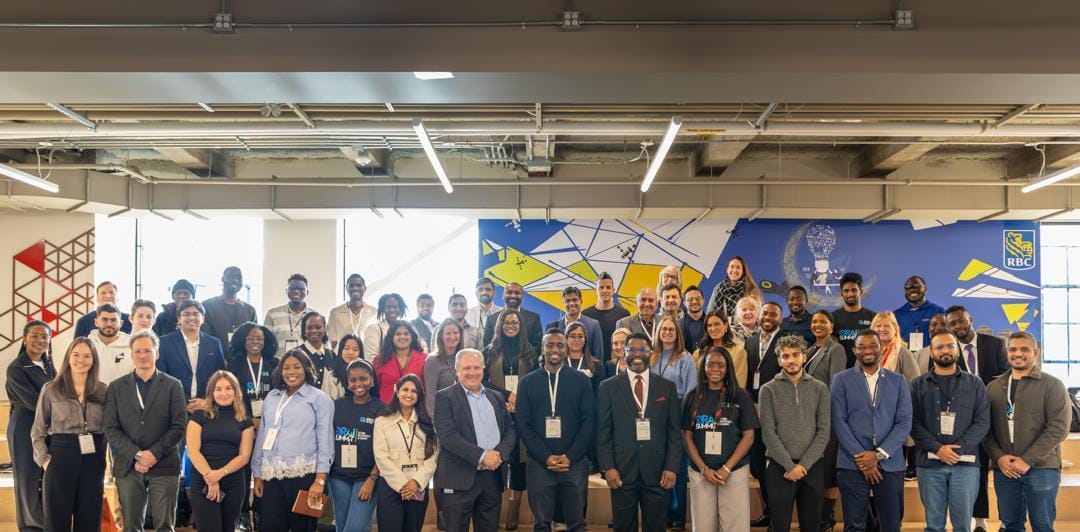
In an effort to advance the ethical governance of artificial intelligence (AI) and ensure that emerging technologies serve the public good, the Ottawa Responsible AI Hub (ORAH) convened leaders from government, academia, industry, civil society, and the research community for the inaugural Ottawa Responsible AI Summit.Held on Wednesday, November 19, 2025, at Bayview Yards, the Summit focused on building a shared understanding of how AI can be governed responsibly and transparently in a rapidly evolving technological landscape. Conversations centered on the policy, technical, and community frameworks needed to strengthen trust, protect rights, and support inclusive innovation.
Participants included Honourable Jenna Sudds, P.C., M.P., Member of Parliament for Kanata—Carleton; Sonya Shorey, President and CEO of Invest Ottawa; and Professor Graeme Auld of Carleton University’s School of Public Policy and Administration. They were joined by senior experts from organizations including Google Cloud, Microsoft, IBM Consulting, Mila, PwC Canada, the Canadian Digital Service, and the Office of the Privacy Commissioner.
In his opening remarks, Somto Mbelu, Founder and Program Lead of the Ottawa Responsible AI Hub, emphasized the need for AI governance frameworks that are inclusive and globally informed. He noted that AI must be shaped with intention, accountability, and a commitment to protecting communities from harm.
“AI presents tremendous opportunities for innovation, prosperity, and public benefit. But without intentional guardrails and a shared vision rooted in equity, it risks amplifying the very inequalities we are trying to solve,” he said. “Our goal with this Summit was to create a space where diverse perspectives build the foundations of responsible AI. The future of AI governance cannot be written by one sector or one worldview. It must be co-created.”
He added that the Ottawa Responsible AI Summit represents the beginning of a long-term, community-driven initiative to position Ottawa as a leader in fair, transparent, and human-centered AI systems. “We want Ottawa to be a model city where responsible AI is not an afterthought. It is the culture, the design, and the practice.”
Honourable Jenna Sudds, Member of Parliament for Kanata—Carleton, House of Commons, reinforced the federal government’s commitment to ensuring that Canadians can benefit from AI while being protected from its risks. She emphasized the importance of trust, transparency, and strong public oversight as Canada continues to advance AI policy and regulatory frameworks. She noted that responsible AI is not merely a technical matter, but a societal priority that requires collaboration across government, industry, academia, and communities.
Prof. Graeme Auld, School of Public Policy and Administration; Co-Editor of Regulation & Governance, Carleton University, delivered the keynote address, focusing on the emerging field of AI risk assurance. He highlighted the growing need for structured oversight mechanisms that allow AI systems to be audited, evaluated, and governed consistently across sectors. His insights provided a clear foundation for understanding how policy, regulation, and risk frameworks must evolve to keep pace with rapid advancements in AI development.
Also speaking, Sonya Shorey, President and CEO of Invest Ottawa, emphasized Ottawa’s rising role as a national and global contributor to responsible technology development. She connected the Summit’s goals with the city’s innovation ecosystem and highlighted the importance of building AI systems that serve the public interest while strengthening economic competitiveness.
The Summit featured two major panel sessions that brought together leading voices from policy, technology, industry, and academia. The first panel, “Operationalizing AI Ethics: Lessons from the Field,” was moderated by Mante Molepo, ICD.D, Founder and CEO of Mante Molepo Consulting, and featured Hammed Afenifere, Co-Founder and CEO of Oneremit; Marcos Rezende, Senior Product Designer at Microsoft; Vance Lockton, Senior Technology Policy Advisor at the Office of the Privacy Commissioner of Canada; Professor Christoph Brunner of Erasmus University Rotterdam; Mélanie Gilbert, Executive Partner at IBM Consulting; and Brett Tackaberry of Google Cloud and Ottawa Civic Tech.
The second panel, “AI, Policy, and Community Data Justice: Who Owns Our Neighborhood’s Story?” was moderated by Dr. Chikezirim Nwoke of Queen’s University, and featured Harsh Sahni, Manager of AI Risk and Governance at PwC Canada; Professor Fola Adeleke, Executive Director and Co-founder of The Global Center on AI Governance; Isadora Hellegren Létourneau, Senior Program Manager for AI Policy Research at Mila; Michael Karlin, Acting Director of Policy at the Canadian Digital Service; and Ruth Bankey, Senior Advisor in Business and Artificial Intelligence at the Canada Revenue Agency.
Additional presentations included contributions from Brett Tackaberry, offering practical tools for operationalizing AI transparency, safety and security. The participation of Michael Karlin from the Canadian Digital Service added an important public sector perspective on operationalizing AI safety and accountability within government systems.
Across all sessions, one message was clear: responsible AI requires shared accountability. The Summit reinforced the need for diverse voices, culturally aware frameworks, stronger governance structures, and continuous public engagement.
The event was formally closed by Dr. Chikezirim Nwoke, Chairman of the Summit Planning Committee, who thanked the committee members, speakers, partners, attendees, and all stakeholders for their contributions. He emphasized the importance of continued collaboration in building ethical and inclusive AI systems and expressed that the Summit marks the start of ongoing work. Dr. Nwoke added that the Ottawa Responsible AI Hub looks forward to welcoming everyone again at the 2026 edition.
The Ottawa Responsible AI Hub (ORAH) is a non-profit initiative dedicated to advancing responsible artificial intelligence through education, advocacy, and cross-sector collaboration. Rooted in the belief that embedding responsibility into AI development is no longer optional, the Hub facilitates dialogue, research and action-oriented partnerships that ensure technology serves the public good and protects rights, equity and inclusion.