
Global Forum on Responsible AI 2026 Convenes Global Leaders to Advance Data Justice and Contextual AI Governance
As artificial intelligence continues to reshape societies, economies, and governance systems, the need for context-aware, equitable, and accountable frameworks has become increasingly urgent.
The Global Forum on Responsible AI is a travelling convening led by the Ottawa Responsible AI Hub (ORAH), designed to bring critical conversations on AI governance to diverse regions of the world. By engaging both local and global stakeholders, the Forum creates a platform for context-driven dialogue on how AI systems can be designed, governed, and deployed in ways that are genuinely responsive to the needs and circumstances of the communities where they are deployed.
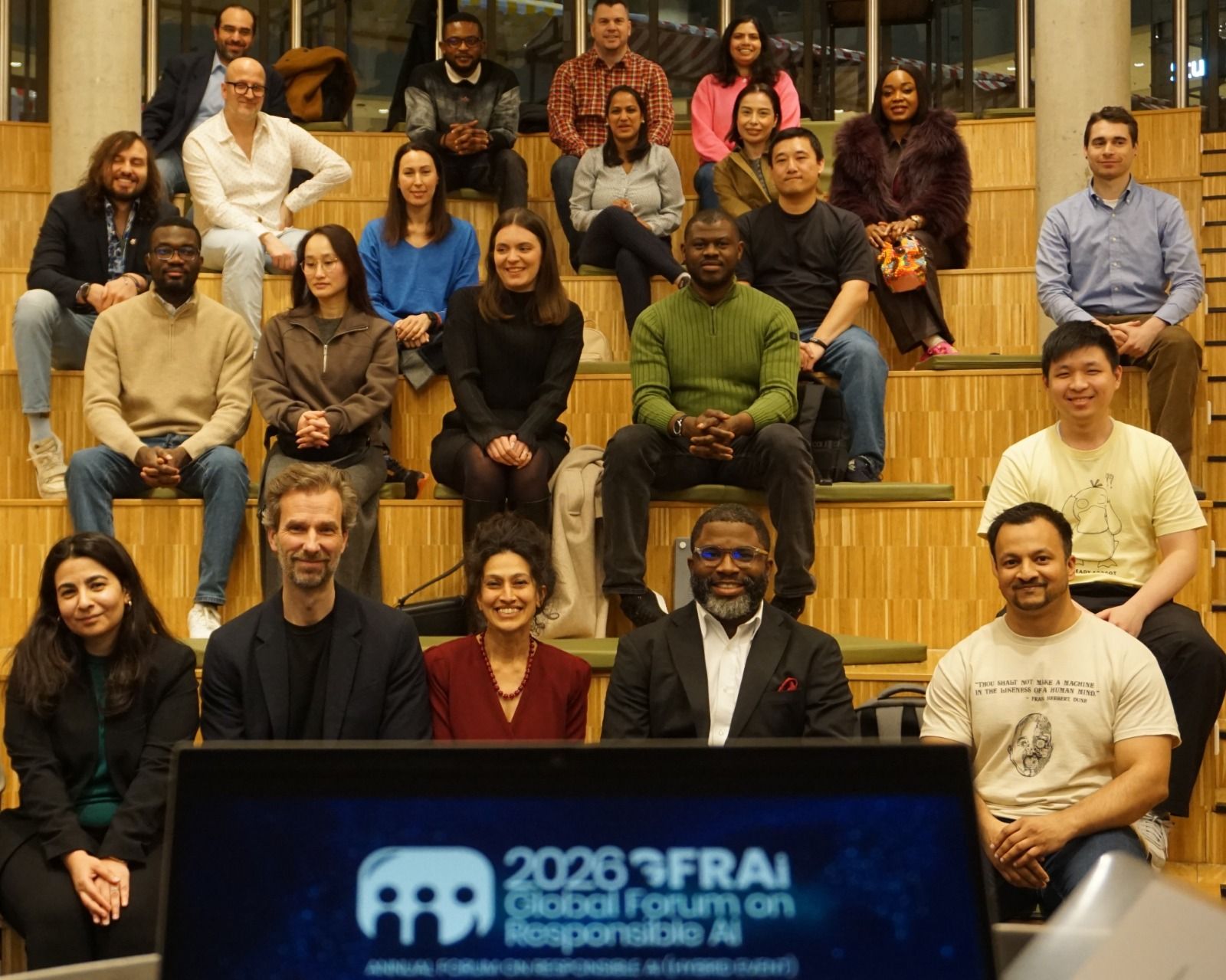
In its inaugural 2026 edition, ORAH, in collaboration with The Hague University of Applied Sciences and the Hague Institute for Innovation of Law (HiiL), convened global leaders in The Hague, Netherlands, on Friday, March 13, 2026.
Under the theme “Beyond Universal Models — Designing Adaptable AI Frameworks Grounded in Data Justice,” the Forum brought together policymakers, researchers, industry leaders, and civil society actors to explore how AI governance can move beyond one-size-fits-all approaches toward more context-sensitive and inclusive models.
Opening the Forum, Dr. Somto Mbelu, Founder of the Ottawa Responsible AI Hub, emphasized the importance of co-creation in shaping AI systems that serve the public good, noting that responsible AI must reflect the lived realities of the communities it impacts.
“People who use these systems, and people who design them, must have a voice, so that we can all co-create a sustainable future,” he stated.
The Forum featured opening addresses from leading global experts, including Marietje Schaake of Stanford University and Professor Payal Arora of Utrecht University. Their contributions highlighted critical challenges in global AI governance, including enforcement gaps in regulatory frameworks such as the GDPR and the need to center the perspectives of the majority world in AI design and deployment.
A central theme throughout the discussions was the limitation of universal AI governance models. Speakers emphasized that while global principles such as fairness, transparency, and accountability remain essential, they must be adapted to local realities, particularly in low-resource and Global South contexts where infrastructure, data ecosystems, and institutional capacity vary significantly.
Ronald Lenz, Director of Innovation at HiiL, underscored the importance of designing AI solutions that prioritize access and usability, particularly in development contexts where systems must operate within real-world constraints such as limited connectivity and varying literacy levels.
Panel discussions further explored the intersection of AI, policy, and data justice, addressing key issues including algorithmic bias, regulatory enforcement, and the concentration of AI power among a small number of global technology actors. Participants examined how multi-level governance frameworks spanning global, regional, national, and local levels can offer more adaptive and coherent approaches to AI regulation.
From an African perspective, Dr. Kudakwashe Dandajena of the African Union Development Agency emphasized the continent’s efforts to develop coordinated AI strategies grounded in development, inclusion, and responsible innovation. He highlighted the role of responsible AI in building trust among policymakers and enabling countries to harness AI for socio-economic transformation.
Discussions also explored the role of the private sector in embedding data justice into AI systems. Derick Adil, Head of AI and Privacy Governance at Globe Telecom and ISO Convener, emphasized that trust is becoming a defining currency in the digital economy, requiring organizations to integrate fairness, accountability, and risk management into their core AI strategies.
Across sessions, a consistent message emerged: responsible AI is not only about minimizing risk, but also about expanding access, enabling opportunity, and ensuring that technological advancement benefits underserved populations. The Forum reinforced the importance of inclusive design, participatory governance, and continuous feedback mechanisms to ensure AI systems remain aligned with societal needs.
The event concluded with a call for sustained collaboration across sectors and regions. Dr. Mbelu noted that the Global Forum is part of a broader effort to bring responsible AI conversations to diverse global contexts and to foster partnerships that translate governance principles into practice.
“We should be the ones shaping what technology does for us, not the other way around,” he concluded.
The event was moderated by Zainab Malik, Moderator and Senior Policy Advisor at the Hague Institute for Innovation of Law (HiiL), and featured contributions from Morraya Benhammou and Kanan Dhru of The Hague University of Applied Sciences. The Forum convened over 200 global participants, both in person and online, spanning media, academia, technology, policy, and government.
The Global Forum on Responsible AI marks the beginning of a global, multi-stakeholder initiative to advance equitable, context-driven AI governance. The Ottawa Responsible AI Hub will continue to expand this dialogue through future convenings and cross-regional partnerships.